Why rebuilding after crisis requires more than roads, schools, and clinics
When a community has been hit by crisis, displacement, violence, or long-term instability, the damage is not limited to what can be photographed. Buildings collapse and water systems fail. Schools close and livelihoods disappear. Families are forced to move. These visible losses matter, and they deserve urgent response. But there is another kind of infrastructure that can also be damaged: the human capacity to trust, learn, work, care for children, resolve conflict, and imagine a future. This infrastructure lives inside people and between people. It is carried in our relationships, shared memory, and the basic expectation that tomorrow is worth preparing for.
At Cultura Connector, this is one of the reasons we developed GRIT, Games for Resilience and Interactive Transformation. GRIT is a community-led, culturally adaptable, trauma-informed role-play framework designed to help people process distress strengthen community capacity through guided experiences and facilitated debrief. It is not a replacement for clinical mental health treatment. It is designed for people experiencing mild to moderate distress, with safeguards and referral pathways for participants who need higher levels of care.
We developed this program because communities cannot fully rebuild while distress or displacement is still running the system.
Resilience is not separate from recovery
Resilience is often treated as a secondary concern after a crisis. First comes shelter, food, safety, medical care, and then schools. Resilience-building is added later (if funding allows). This order makes sense in the first hours and days of an emergency. People need to survive. But over time, recovery depends on much more than physical survival. It depends on whether people can participate in community life and trust others enough to build together again.
The World Health Organization’s World mental health report makes the case that brain health is part of overall health and well-being. The report also states that the need for support is high worldwide while responses remain insufficient and inadequate (World Health Organization [WHO], 2022). That gap becomes especially visible in communities affected by conflict, displacement, and climate disasters.
Loss and stress can show up in many forms. Symptoms include:
- Nightmares
- Panic
- Withdrawal
- Irritability
- Numbness
And some people may not use medical language at all. They might describe:
- Exhaustion
- Anger
- Stomach pain
- Headaches
- Family conflict
- Hopelessness
- An inability to concentrate
In children, distress can also appear as:
- Aggression
- Regression
- Fear
- Silence
- Difficulty playing
- or trouble learning
When many people in the same community are carrying distress at the same time, it becomes a public problem. It affects nearly every part of society… if teachers are overwhelmed, parents are in survival or intense rebuilding mode, students cannot concentrate, and neighbors no longer trust each other, the rebuilt systems will remain fragile and prone to cracking.
The cost of untreated stress and loss is more than emotional
There is also an economic argument for taking these symptoms seriously.
A 2022 study estimated that unaddressed mental health issues created an excess economic burden of $232.2 billion in the United States in 2018, including health care costs, unemployment, productivity loss, and other costs (Davis et al., 2022). This number shouldn’t be used as a global estimate because the study is U.S. based, and costs will vary widely across countries and systems. But it does show that trauma has economic consequences.
Professional support is often placed in the category of social good. And it belongs there. But it also belongs in the categories of economic recovery and workforce development as well as community resilience. Because when lack of resilience weakens a person’s ability to function, it also weakens the systems that rely on that person. And when this affects a large part of a population, it can slow recovery across whole communities.
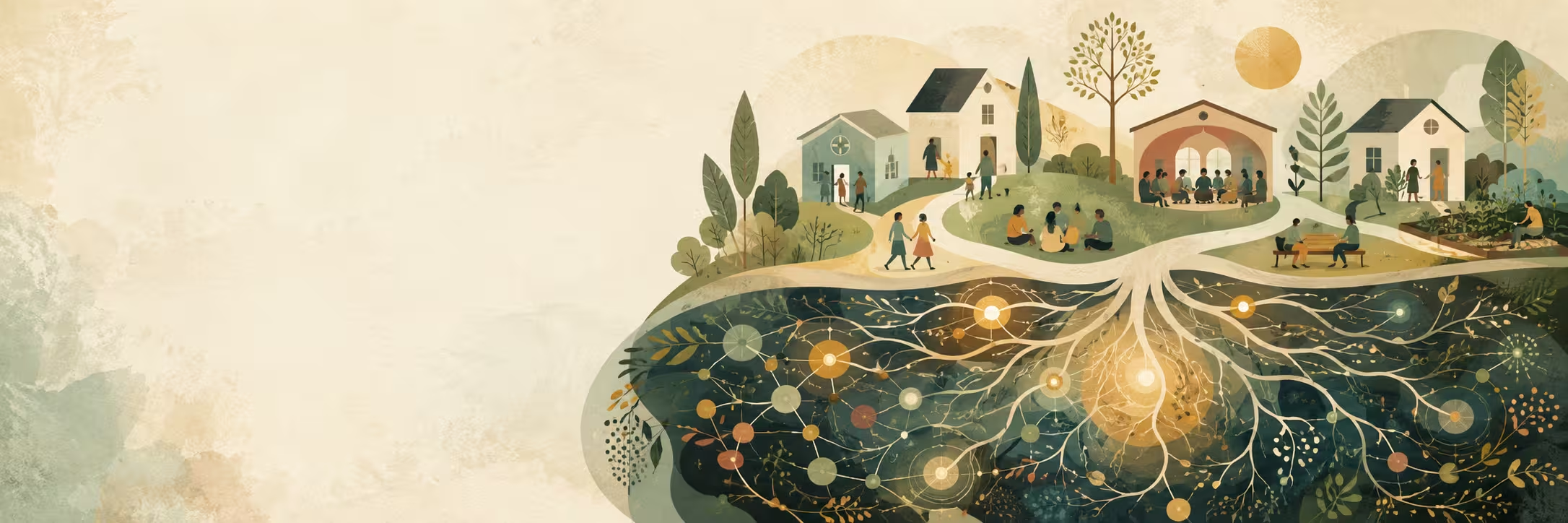
This is why resilience and recovery should be understood as community infrastructure.
Because infrastructure is whatever allows a society to function. In a post-crisis community, skills such as emotional regulation and social connection are a vital part of both recovering and maintaining the operating system.
Clinical care cannot carry the entire burden alone
People experiencing acute crises and severe symptoms like active suicidality and serious self-harm (or other high-risk situations) need qualified mental health care. As such, any responsible community-based program must know its limits and have referral and escalation pathways.
The problem is that not everyone is experiencing acute symptoms and clinical services and by themselves, these services cannot meet the full scale of need in many post-crisis settings. There are often too few specialists because services could be concentrated in cities. Families can also face cost, transportation, or language barriers… and stigma can keep people from seeking help – especially in cultures where the term “mental health” is mistrusted or associated with shame.
WHO and UNHCR created the Mental Health Gap Action Programme Humanitarian Intervention Guide (mhGAP-HIG) because many humanitarian settings have limited access to specialists and treatment options. The guide supports non-specialist health-care providers in recognizing and managing mental conditions during emergencies (WHO & United Nations High Commissioner for Refugees [UNHCR], 2015). The guide recognizes that health systems need layers. The same is true for community resilience building and recovery.
After a crisis, most people need protection and stability. Some need a safe group where they can rebuild confidence, practice coping skills, restore social connection, and remember that they are more than what happened to them. A strong and supportive ecosystem includes all of these.
The MHPSS pyramid path
Mental health and psychosocial support is often called MHPSS in humanitarian work. This field already recognizes that people need different kinds of support at different levels of need.
The IASC Guidelines for Mental Health and Psychosocial Support in Emergency Settings describes a multi-layered support system. At the base are fundamental services and security. Above that are community and family supports. Then comes focused, non-specialized support. At the top are specialized services for people with more severe needs (Inter-Agency Standing Committee [IASC], 2007).
This layered model helps prevent two common mistakes….
The first mistake is treating every form of distress as a medical disorder. After a crisis, distress is widespread and often understandable. People might need support, stability, connection, and meaning before they need diagnosis.
The second mistake is assuming that community support is enough for everyone. Some people need specialized care, and community programs must be able to recognize when a participant’s needs fall outside their scope.
Games for Resilience and Interactive Transformation (GRIT) sits in the middle of this conversation. It is a structured, trauma-informed, culturally adapted program that uses roleplay and facilitated debrief to help participants build coping strategies, connection, and resilience. The program is designed to work alongside local partners, local facilitators, and referral systems. A community-based resilience-building program should be part of a larger care and support network.
Why culture needs to be in the equation
Cultura Connector’s work begins with a belief that culture shapes how people understand distress, healing, responsibility, shame, courage, grief, and belonging.
Any intervention that ignores culture can be technically well-designed and still fail because people may not trust it. They might not recognize themselves in it and they could feel judged or misunderstood or they may reject the language of the program even if they need the support it offers. This is why cultural adaptation is a vital safeguard.
In GRIT, local partners are co-designers of the experience. The stories, characters, and even the reflection questions must fit the community’s lived reality. This is especially important when working with migrants, refugees, First Nation communities, or groups whose stories have often been told inaccurately by outsiders.
UNICEF’s operational guidelines for community-based MHPSS in humanitarian settings emphasize the importance of supporting children and families within the community systems that surround them (UNICEF, 2019). That approach aligns with a core principle of Cultura Connector’s work which is that people should not have to leave their culture behind in order to receive support.
In many communities, healing is already tied to traditions like story, ceremony, ancestors, and collective memory. A culturally grounded program helps communities work with the meaning-making tools they already have.
Why story and play belong in recovery
The word “play” might sound too light for recovery to some. That is understandable because brain health is serious and human suffering deserves respect.
But play is one of the oldest ways humans practice being alive.
Children can use play to process fear, rehearse roles, and make sense of the world. Adults do it too, however we often call it simulation or training. A firefighter drill is nothing more than a structured pretend scenario intended to mimic real life for practice. The following are just a few examples of structured pretend:
- Mock trials in legal training
- Medical simulations
- Model United Nations
- Military drills
- De-escalation training
- Evacuation drills
The key to success for each of these is whether the pretend space is designed with enough safety and purpose combined with skillful facilitators and a strong debrief.
The WHO Regional Office for Europe’s scoping review on arts and health examined a large body of research on arts participation and health outcomes (Fancourt & Finn, 2019). GRIT is not the same as all arts-based health programs, and it should be evaluated on its own terms. But the broader field supports the point that creative, embodied, relational experiences belong in health and well-being conversations.
Structured roleplay can offer something that direct discussion sometimes cannot… it creates a self-regulated distance from your actions. For example, a participant may not be ready to say, “I am afraid,” but they may be able to say, “My character is afraid.” They may not want to describe their own loss, but they might be able to help a fictional village decide how to rebuild after loss. This distance is what makes reflection possible.
In transformative design, this is called the alibi, or the protective layer created by fiction. The story gives people a way to approach real emotions without being forced into direct exposure. When facilitated well, that can support agency rather than overwhelm the participants.
Local facilitators are part of the infrastructure
One of the biggest challenges in global health is scale. There are not enough specialists to meet the need, especially in low-resource, post-crisis, or displaced settings. And even when specialists are available, they cannot be everywhere at once.
This is why task-sharing and community-based models are vital. The 2023 mhGAP guideline update continues WHO’s long investment in supporting non-specialist health workers in low- and middle-income countries to provide care (WHO, 2023). In humanitarian settings, the mhGAP-HIG adapts this logic for emergencies (WHO & UNHCR, 2015).
GRIT applies a related public health logic, though it is not a clinical mhGAP program. Instead of depending only on outside experts, GRIT trains local facilitators to deliver structured, trauma-informed roleplay sessions with appropriate oversight, documentation, and referral pathways. The local facilitators provide the language and cultural knowledge. They understand which metaphors will work and what locations feel safe. They also understand which community tensions must be handled carefully, as well as the local leaders that need to be involved.
When trained and supported well, local facilitators also bring long term capacity. A program that disappears when the outside team leaves has limited value because it doesn’t address the ongoing challenges of displacement and loss. A program that strengthens local skills, local confidence, and local networks becomes part of the community’s recovery infrastructure.
Offline design on purpose
Digital tools are expanding quickly, and many are valuable. But crisis settings often reveal the limits of assuming stable connectivity.
After disasters, electricity can fail and internet access may be limited or monitored. Families may share devices and refugees may not have safe digital privacy. Rural communities might have limited bandwidth. And in some political contexts, digital records can create real risks.
GRIT is designed to be fully analog. That means it can be delivered without phones or internet access. Materials can be printed out and shared. Sessions can happen in schools, shelters, community centers, or other trusted spaces. Offline design also changes the emotional quality of the experience. Participants are looking at one another and building a shared story in real time. They are practicing cooperation through a shared story and slowly establishing or reinforcing their resilience inside a human group.
For many communities, especially those recovering from disruption, this relational aspect is the foundation of their healing.
Community resilience is built between people
A 2023 scoping review in BMC Public Health found that community resilience and social capital were generally associated with health in public health emergencies and disasters, while also noting that these concepts need better measurement and stronger evaluation (Hall et al., 2023). As well, the review found that social group activities can enhance community resilience and social capital.
This is important for recovery because stress and loss can often cause isolation among people. It can narrow attention to survival and interrupt the everyday social practices that help communities regulate themselves. Group-based programs can help rebuild those social pathways.
In GRIT, the group is part of the mechanism. Participants practice being with others again and making choices together. They face fictional challenges together and they debrief together. Most importantly, they build shared language for stress, coping, and recovery. In a post-crisis community, shared language is powerful. It lets people say, “This is what happens to us under stress,” instead of, “Something is wrong with me alone.”
This final co-created program is intermingled with their own cultural stories… in essence, creating a cultural asset that can shape their future by standing with their past.
What funders should look for
If recovery is community infrastructure, then funders need to assess programs differently. A strong program should be clear about who it is for and who it is not for. GRIT is designed for mild to moderate distress, but not acute psychiatric crisis. This boundary is essential for both safety and efficacy.
A strong program should include safeguarding. This means providing screening, facilitator training, escalation protocols, referral pathways, documentation, and support for facilitators who may themselves be exposed to difficult stories (or carry their own burdens).
It should be culturally adapted with local partners. Translation alone is not enough. The emotional logic of the program has to fit the community and their lived experience as well as their sacred stories.
The program should build local capacity. If every session requires outside “experts” to lead it forever, the model isn’t be scalable. And it could fail the moment the specialists leave the area.
A robust program should work in low-resource conditions. In post-crisis settings, offline delivery is far more practical when digital infrastructure is absent completely or still in recovery.
And the program should evaluate outcomes without overburdening participants. Funders need evidence, but communities should not be turned into data extraction sites. Evaluation should measure only what matters:
- Reach
- Retention
- Distress
- Resilience
- Social connection
- Safeguarding incidents
- Referrals
- Participant experience
- and longer term follow-up where possible
The MHPSS Minimum Service Package was created to help humanitarian actors identify priority support activities during emergencies (MHPSS MSP, 2025). Funders can use that kind of systems thinking when considering programs like GRIT. The question should be, “Where does this fit in a layered support system, and what gap does it responsibly fill?”
Rebuilding people is rebuilding systems
After a crisis, communities need functional infrastructure like roads, housing, schools, clinics, and food as well as water. Nothing in this argument replaces those needs. But recovery also depends on whether people, themselves, can function inside those rebuilt systems. For example, a school needs children who can learn and teachers who can teach; a livelihood program needs people who can plan, cooperate, and persist; a peacebuilding effort needs people who can imagine a future with others; and a public health program needs trust.
Cultura Connector’s GRIT program begins from the premise that recovery is part of what allows reconstruction to hold. It treats play, culture, and community as tools that can help people return to themselves and to one another.
The future of resilience and recovery needs traditional infrastructure as well as community space where people can gather safely, practice courage, remember who they are, and begin again together. That, too, is infrastructure.
References
- Davis, L. L., Schein, J., Cloutier, M., Gagnon-Sanschagrin, P., Maitland, J., Urganus, A., Guerin, A., Lefebvre, P., & Houle, C. R. (2022). The economic burden of posttraumatic stress disorder in the United States from a societal perspective. The Journal of Clinical Psychiatry, 83(3), 21m14116. https://www.psychiatrist.com/jcp/economic-burden-posttraumatic-stress-disorder-united-states-societal-perspective/
- Fancourt, D., & Finn, S. (2019). What is the evidence on the role of the arts in improving health and well-being? A scoping review. WHO Regional Office for Europe. https://www.who.int/europe/publications/i/item/9789289054553
- Hall, C. E., Wehling, H., Stansfield, J., South, J., & Weston, D. (2023). Examining the role of community resilience and social capital on mental health in public health emergency and disaster response: A scoping review. BMC Public Health, 23, Article 2482. https://doi.org/10.1186/s12889-023-17242-x
- Inter-Agency Standing Committee. (2007). IASC guidelines for mental health and psychosocial support in emergency settings. https://www.who.int/publications/i/item/iasc-guidelines-for-mental-health-and-psychosocial-support-in-emergency-settings
- Mental Health and Psychosocial Support Minimum Service Package. (2025). Mental Health and Psychosocial Support Minimum Service Package. https://www.mhpssmsp.org/en
- UNICEF. (2019). Community-based mental health and psychosocial support in humanitarian settings: Three-tiered support for children and families. https://www.unicef.org/reports/community-based-mental-health-and-psychosocial-support-guidelines-2019
- World Health Organization. (2021). Comprehensive mental health action plan 2013–2030. https://www.who.int/publications/i/item/9789240031029
- World Health Organization. (2021). Guidance on community mental health services: Promoting person-centred and rights-based approaches. https://www.who.int/publications/i/item/9789240025707
- World Health Organization. (2022). World mental health report: Transforming mental health for all. https://www.who.int/publications/i/item/9789240049338
- World Health Organization. (2023). Mental Health Gap Action Programme guideline for mental, neurological and substance use disorders. https://www.who.int/publications/i/item/9789240084278
- World Health Organization, & United Nations High Commissioner for Refugees. (2015). mhGAP Humanitarian Intervention Guide: Clinical management of mental, neurological and substance use conditions in humanitarian emergencies. https://www.who.int/publications/i/item/9789241548922